
Sources Behind Previous Residents of a West Hollywood Address
One address can have an ownership trail, an occupancy trail, and a building trail. The recorder answers who received or conveyed a recorded interest. A city directory answers who was listed at a publication date. The census adds household relationships at an enumeration date. A permit dates work and identifies an applicant or contractor. A Sanborn map shows a structure and use, not a person. The era table keeps those source roles distinct.
| Source | Years it covers | Where held | What it shows |
|---|---|---|---|
| Recorded property records | 1850-present | LA RR/CC Norwalk | Ownership and security instruments, indexed by name and year |
| Assessor parcel roll | Current roll and displayed history | LA County Assessor | AIN, situs, characteristics, values, mailing clue |
| West Hollywood permits | City era mainly 1984-present | City Clerk and Building and Safety | Construction, alteration, applicant, contractor, dates |
| City and reverse directories | Regional runs from 1872; reverse 1906, 1927, 1956-1987 | LAPL and ResCarta | Listed adults, addresses, businesses, historical household clues |
| Federal census | Released through 1950 | NARA, FamilySearch, libraries | Household members, relationships, ages, birthplaces |
| Sanborn maps | Edition and sheet specific | LOC and LAPL | Footprint, material, use, street context |
| Probate, newspapers, obituaries | Title and case specific | LA Court, LAPL, archives | Death, heirs, family, address, and closing clues |
Start with the source that matches the era in question. A current owner question begins with the Assessor. A 1920s household question begins with regional directories. A transfer in 1957 belongs at the recorder index and its floor split. A missing family member may need probate or an obituary rather than another property search.
West Hollywood Previous Residents: Current AIN and Legal Description
Before searching previous residents, stabilize the address. Run the current street form through the Los Angeles County Assessor and record the ten-digit AIN, situs, map and legal clues, parcel type, and any subdivision or unit information. Open the county GIS viewer and confirm the target shape. A legal description, tract, lot, block, or AIN lineage can survive a street-name change, renumbering, parcel split, or condominium map more reliably than a literal address.
Separate the situs from the tax mailing address. The situs is the physical assessed site. The mailing field is a destination for official notices. Copy both exactly when lawfully visible, but label the mailing field as a tax clue. A matching address can support an ownership hypothesis. It does not establish who lived there.
West Hollywood's compact, dense parcel pattern makes unit and parcel matching important. One street number can hold several assessments or a single large parcel with many households. The property detail is the continuity key for the deed chain, not a complete list of prior residents.
The LA County Assessor Property Search and parcel viewer provide the current parcel start. Save the date of the lookup because roll display changes.
Find a West Hollywood Deed for Previous Residents at Norwalk
The Los Angeles County recorder keeps real-estate records from 1850, but its official index is not searchable online by address or APN. The Norwalk index is alphabetical by grantor, grantee, and year recorded. Translate the current parcel into a party name and approximate acquisition year before the visit. The current grantee's deed is the first link in the backward ownership trail.
RR/CC lists Norwalk at 12400 Imperial Highway. Its general line is (800) 201-8999. Viewing is free by appointment. Copies can be purchased at the counter or requested by mail, fax, or online after the instrument is known. Ask for the complete document. The office does not sell selected pages as a substitute for the full instrument.
The RR/CC contact and archive route shown in the project capture gives the practical phone and office channel for a known deed request.
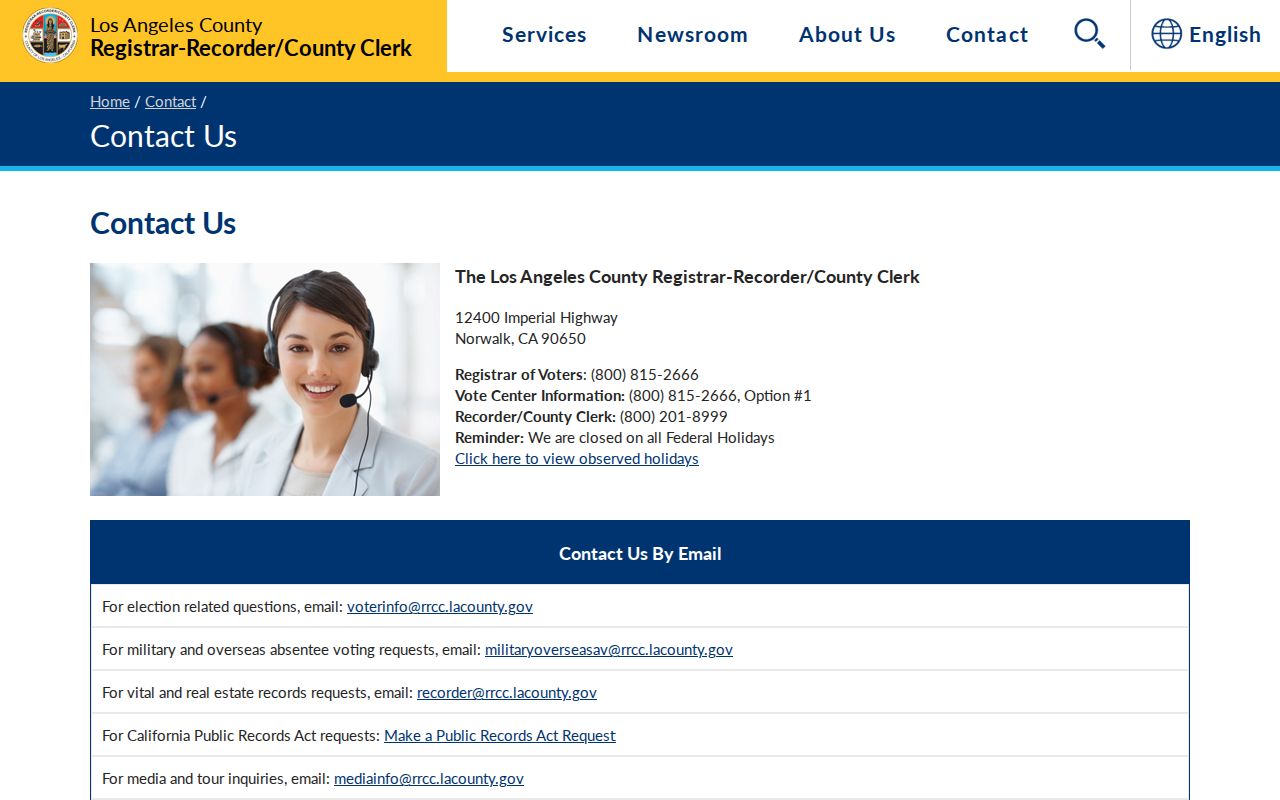
Use the contact image as a starting point for office access. The name-and-year index still has to identify the document before a copy order can be precise.
Search Each West Hollywood Previous Resident Seller Backward
A grantor is the person or entity conveying an interest. A grantee receives it. The chain of title follows those roles backward. Read the current deed, record the grantor, grantee, document number, recording date, and legal description, then search the seller as an earlier grantee. Repeat only when the legal description confirms that the same land is being followed.
- Normalize today's address and save unit, AIN, situs, map, and legal-description clues.
- Find the current acquisition instrument by grantee name and approximate recording year.
- Copy the grantor, grantee, date, document number, and full legal description.
- Search the prior grantor as an earlier grantee and compare the legal description.
- Repeat until the index or land continuity becomes uncertain, then mark the gap.
- Grantor
- The party conveying or encumbering a property interest.
- Grantee
- The party receiving an interest in the instrument.
- Chain of title
- The linked sequence of recorded interests used to trace ownership backward.
- Legal description
- The recorded land description that can carry continuity when a street label changes.
Names alone are not enough. A common seller can have several properties. Parcel splits, maps, and old tract descriptions can create a false match if the land description is skipped.
The 1957-1958 West Hollywood Deed Records Divide
Los Angeles County's physical index arrangement creates a useful chronological marker. Records from 1850 through 1957 are reviewed on the lower level at Norwalk. Records from 1958 forward are on the second floor. The split is an office-access fact, not a claim that one set is missing online. It tells a house historian where to move when a deed trail crosses the date.
The recorder index is free to inspect by appointment. An online order through a copy service is a later step, after the document number or book-and-page clue is known. The official office explains that a known address alone will not be converted into an index search. Keep the trip, index volume, names tried, and negative result in the research notes.
The recorder viewing instructions describe the floor arrangement and grantor-grantee method.
Note: The 1850 start date shows record depth, not proof that a present building or street number existed in the earliest volume.
West Hollywood Past Households in Directories and Census
Ownership and household history run beside each other. LAPL's city-directory collections cover regional Los Angeles and Hollywood titles, including a verified 1906 Hollywood volume and reverse directories from 1906, 1927, and 1956 through 1987. The city directory page explains the shelf and abbreviation keys. Here, the task is narrower: take one address from the deed trail and test it against the relevant years.
Pair a reverse-directory entry with the alphabetical name section. Copy h, r, wid, spouse, occupation, street number, page, and volume. Then compare the closest released census. The 1890 federal schedule loss makes annual directories useful between released census years. A listing can show a household clue at a publication date, but it cannot prove ownership or current residence.
Obituaries, cemetery records, newspapers, and probate can explain a disappearance, a move, a marriage, or an estate transfer. Save the exact date and source. The cityhood boundary matters: before 1984, a directory may say Sherman, Hollywood, or Los Angeles even when the physical address is in today's West Hollywood.
- Choose a directory year close to the address date and copy the name, street, page, and volume details.
- Check the closest released census year for household members, ages, relationships, and birthplace.
- Compare the street spelling, number, and household names without forcing one source to match the other.
- Use an obituary, probate file, deed, or vital index to test a move, death, marriage, or estate event.
- Label the conclusion as a listed household, ownership clue, kinship clue, or unresolved possibility.
The LAPL digitized directories are the starting shelf for the listed-household track.
Sanborn Maps and West Hollywood Previous-Resident House History
Sanborn fire-insurance maps show a building's footprint, material, use, street number, and neighboring structures at an edition date. They do not name the owner or every person at the address. LAPL research notes place West Hollywood generally in Sanborn volumes 10 and 20, while the Library of Congress offers a separate digitized collection. Exact sheet and edition coverage must be confirmed through the master address index.
Compare the map's footprint with the assessor parcel and a directory's street entry. A later addition, a demolished structure, or a changed number can explain why a literal search breaks. The deed answers ownership. The directory answers a listed person. The map answers the built setting. Their value comes from the contrast.
The Library of Congress Sanborn collection supplies map scans and catalog context. Do not state an exact sheet when the index has not confirmed it.
West Hollywood Previous Residents: Permits Before and After Cityhood
West Hollywood's Tyler EnerGov permit and licensing system launched August 19, 2024. Current applications and status have an online layer. Permit history and plan duplication still go through the City Clerk. A permit can date construction, alteration, or a house-number assignment and can name an applicant, owner, architect, or contractor as shown in the file. It does not prove that the named person lived at the address.
For a pre-incorporation property, ask the city whether predecessor Los Angeles County permit films transferred. Before November 29, 1984, county rather than city records may hold the relevant administrative file. A focused request should give the address, AIN, project date, permit number, and desired record type. This is often the best way to explain a physical change in a house-history timeline.
A permit and a deed should not be treated as the same event. One dates work; the other records a property interest. The address continuity note belongs beside both.
Archives and Federal Cases in a West Hollywood Previous-Residents Trail
The California State Archives provides county and city records guidance, catalogs, and reference-request routes. Many original records remain with the county or local custodian, so an archive catalog hit is a lead rather than a guaranteed file. Use it for older government series, historical guides, and records that predate the current city system.
Federal court records are a separate layer. The U.S. District Court for the Central District of California covers Los Angeles County, and PACER searches federal party and case indexes. A federal case can connect a name to a filing, party role, date, address as filed, or docket event. It is not a deed chain and it is not a household directory. Use it only when the name, time, or case context fits.
The California State Archives collection guide is the source for county and city record routes.
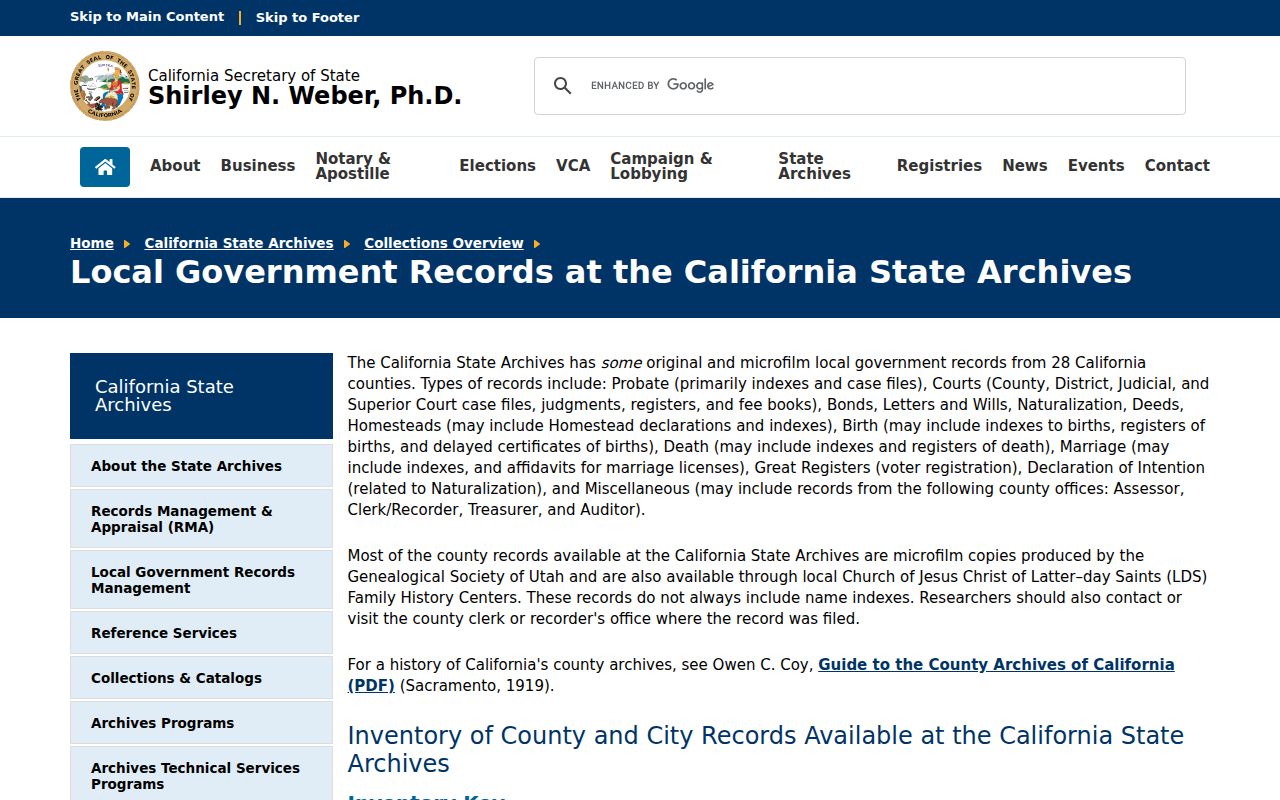
The archive image shows a reference path for older municipal and county material that may not appear in a modern West Hollywood portal.
The Central District of California court site identifies the federal custodian for Los Angeles County cases.
A federal court source can add a dated public filing clue, but the property and directory tracks remain the core previous-residents workflow.
Use PACER for a West Hollywood Previous-Residents Trail
PACER Case Locator requires an account and supports court, region, case number, party, filing-date range, and status or type searches. Dockets can include case and termination dates, parties, attorneys, judges, entries, and document links. The judiciary states a $0.10-per-page charge, a 30-page document cap, and a quarterly waiver when the bill is $30 or less. Verify the live fee policy before opening a document.
A federal result can be useful in an estate, business, or historical research question when the name and date line up with the deed or directory trail. It can also be a false lead. A party address may be a mailing destination, a business address, or an address filed for a specific event. Keep that role with the record instead of calling it a residence.
The PACER access page shown for this project is the federal search channel.
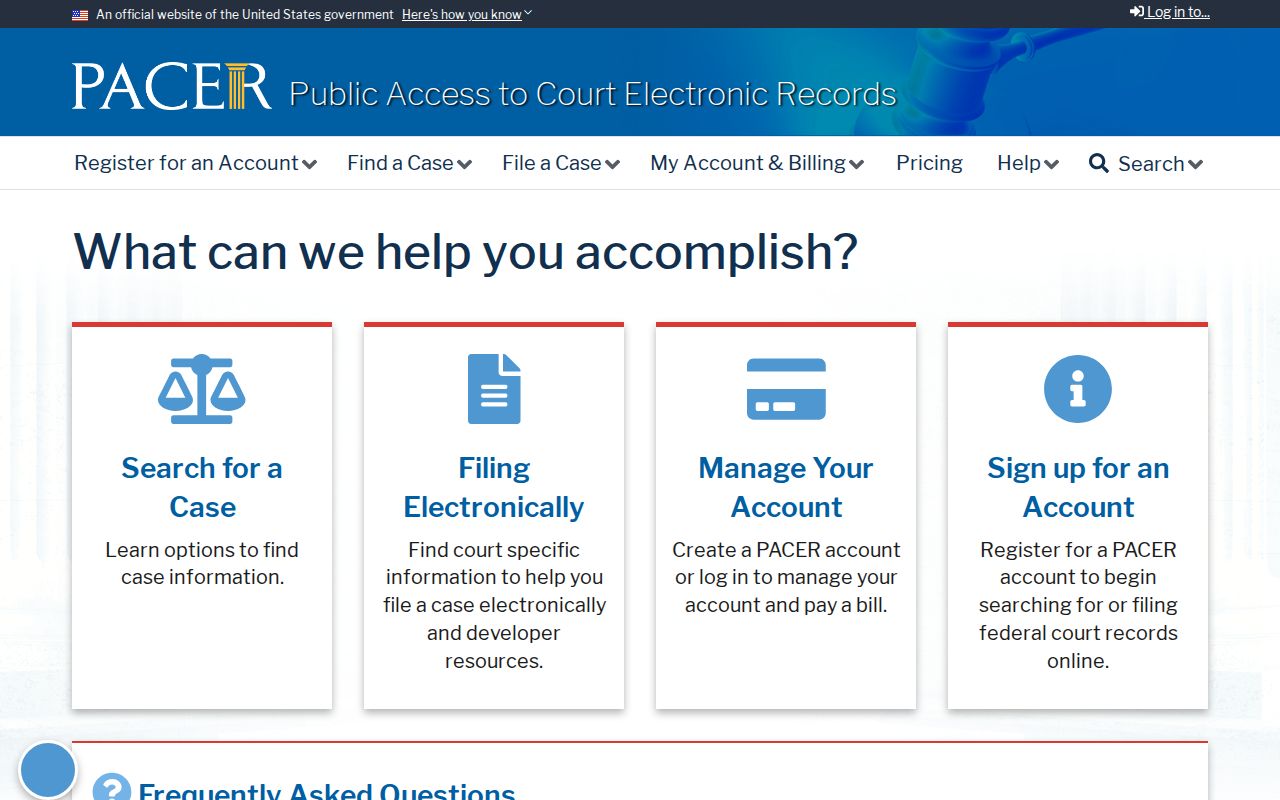
PACER belongs near the edge of a house-history project. It can corroborate a public event, while the deed, directory, census, and probate tracks establish the address history.
Close West Hollywood Previous Residents With Probate
Probate and obituaries can close an older resident trail when a directory entry ends. A probate petition or notice may identify a decedent, petitioner, heirs, devisees, counsel, and addresses as filed. An obituary can supply family names, an earlier address, a place of death, or a service notice. Neither source should be accepted without date, role, and independent comparison to the deed or directory.
Use the court docket to find the case, then ask the clerk for a public document or archived file when the web result is only an index. Vital records may be restricted by authorized-copy rules. Newspapers may have OCR errors. Cemetery pages can be incomplete. A closing note should state whether the evidence shows ownership, a listed household, a kinship clue, or only a possible match.
The result is a backward timeline with gaps marked. That is more useful than filling a missing year with a same-name assumption.
Lawful House History for West Hollywood Previous Residents
Previous-residents research belongs to family history, estate work, local history, and a personal understanding of a known property. It should not expose protected addresses or turn a historic listing into a current-contact claim. Safe at Home, protected voter data, sealed cases, confidential vital records, and private utility or delivery records can leave deliberate gaps.
Lawful personal use. Use dated sources to understand a property's past, and respect living people's privacy. Do not use a deed, directory, map, or court record to stalk, harass, intimidate, or harm another person.
The West Hollywood resident lookup page handles the one-person verification problem. This page keeps its focus on one address moving backward through time. A sound previous-residents result ends with a source list, a confidence level, and a clear statement of what remains unknown.