
What a West Hollywood Resident Lookup Can Confirm
Think of a name search as an evidence grid rather than a single report. One column holds the fact a record can actually confirm. The next names the custodian. The third spells out the route and its limits. Keeping those columns apart stops a tax mailing from being labeled a residence, a court party from being labeled a current resident, or a business address from passing as a home.
| Record | What it confirms | Where | Access |
|---|---|---|---|
| Assessor parcel | Parcel, assessee or mailing clue, not occupancy | LA County Assessor | Address or AIN search |
| Recorded instrument | Named party to a property transaction | LA County RR/CC | Name and year index at Norwalk |
| Voter status | Match for supplied identity and election status | LA County Elections | Last name, birthdate, house number, ZIP |
| Court docket | Party role, case type, filing, events, status when public | LA Superior Court | Case number or paid name service |
| Vital record | Event, date, place, and kinship fields by copy type | RR/CC or CDPH | Eligibility and application route |
| Probate file | Decedent, petitioner, heirs or devisees as filed | LA Superior Court | Public portions and clerk channels |
| Business or license file | Entity, agent, license status, or public practice location | California agencies | Free search, scope varies |
Two records describe one person only when two independent links tie them together. A middle initial paired with an address beats a name alone. So does a case role paired with a known business tie. Write down the search date and the exact spelling. Also note the source URL, and why the result fits.
West Hollywood Resident Lookup Name Variants
Normalize a name, but keep the original form beside it. Try hyphenated and unhyphenated surnames, particles, initials, and middle names. Also try married forms, entity suffixes, and transliteration variants. Older Los Angeles and Hollywood material may apply a community label other than West Hollywood. Family-history work in Russian-language or Jewish lines often needs several spellings of the same household. A court portal's exact-match setting and a directory's OCR layer can each drop a valid variant. Run the alternates through both. Before paying for anything, sketch an identity note. Include the known date range, a possible street, a middle initial, and a family connection. Add any business or license role. Note where the starting name came from. Let the strongest clue drive the next search. If the only overlap is a shared surname, stop at the lead. Do not order a record on that alone.
- Index
- A finding aid that points to a record, party, date, or document number.
- Image
- The scanned or filed record itself, which may contain more detail than an index.
- Docket
- The court's dated register of case events, filings, hearings, and status entries.
- Certified copy
- A copy issued by the custodian with a certification that gives it a defined official use.
Know the difference between an index entry and the image behind it. A search hit proves a file exists. It may not reveal the full address, signature, disposition, or relationship without a lawful request for the document itself.
Verify a West Hollywood Resident Across Records
Verification means anchoring a name to a dated place or role. Ask again elsewhere. Then pose the same question to a second custodian in a different way. The aim is not to gather every mention of a name. Instead, decide whether two records belong to one person. Make that call before ordering a copy.
- Write the exact name, known date range, possible street, middle initial, and source of the starting clue.
- Use an address, parcel, case role, license, or family fact to separate the person from same-name results.
- Check a second source, such as a court role against a parcel clue or probate notice against an obituary.
- Compare the date, record role, location, and spelling. Mark conflicts instead of smoothing them over.
- Order a certified or full copy only when the custodian, identifier, eligibility, and purpose fit.
A strong West Hollywood name search states plainly what it confirmed. That could be a party to a case. It could also be a recorded grantee, a vital event, an heir in probate, or a public license affiliation. It should never dress up a tax mailing address as a current residence. A business location is not a current residence either. Precision is the whole point.
Resident Lookup: Search West Hollywood Court Cases by Name
Los Angeles Superior Court's Find a Case service spans civil, criminal, family, probate, and small-claims information. Coverage periods and image limits vary by category. Civil name search takes a last name plus a first name or company. Criminal search matches defendant names exactly, by prefix, or by sound-alike, with optional filing dates. A direct case-number search is free. Party-name and document-image services require paid access.
| Search control | Required | Result or limit |
|---|---|---|
| Case number | Yes for direct case access | Public case data and case details. |
| Calendar case number | Yes for calendar access | Future hearings and calendar information. |
| Name search | Party or defendant name | Civil, family, probate, small claims, or criminal service. |
| Criminal match mode | Name | Exact Match, Starts With, or Sounds Like. |
| Document images | Case or criteria | Civil and some small-claims images; criminal and family images withheld online. |
The LA Court Find a Case portal lists its coverage: family, probate, and unlimited civil from 1983; limited civil from 1991; small claims from 1992; felony records from 1980; and misdemeanor records from 1988. It also includes some former municipal data. A guest name search costs $4.75 whether or not anything matches. Check fees and image availability before purchasing. A typical result shows the case number, type, filing courthouse and date. It also lists party names and roles, docket events, hearings, disposition or status when public, counsel, and any image links. Sealed, confidential, juvenile, adoption, and other restricted matters may be left out. The PACER Case Locator covers the federal side. It displays the federal name and case-number routes available for a West Hollywood case search.
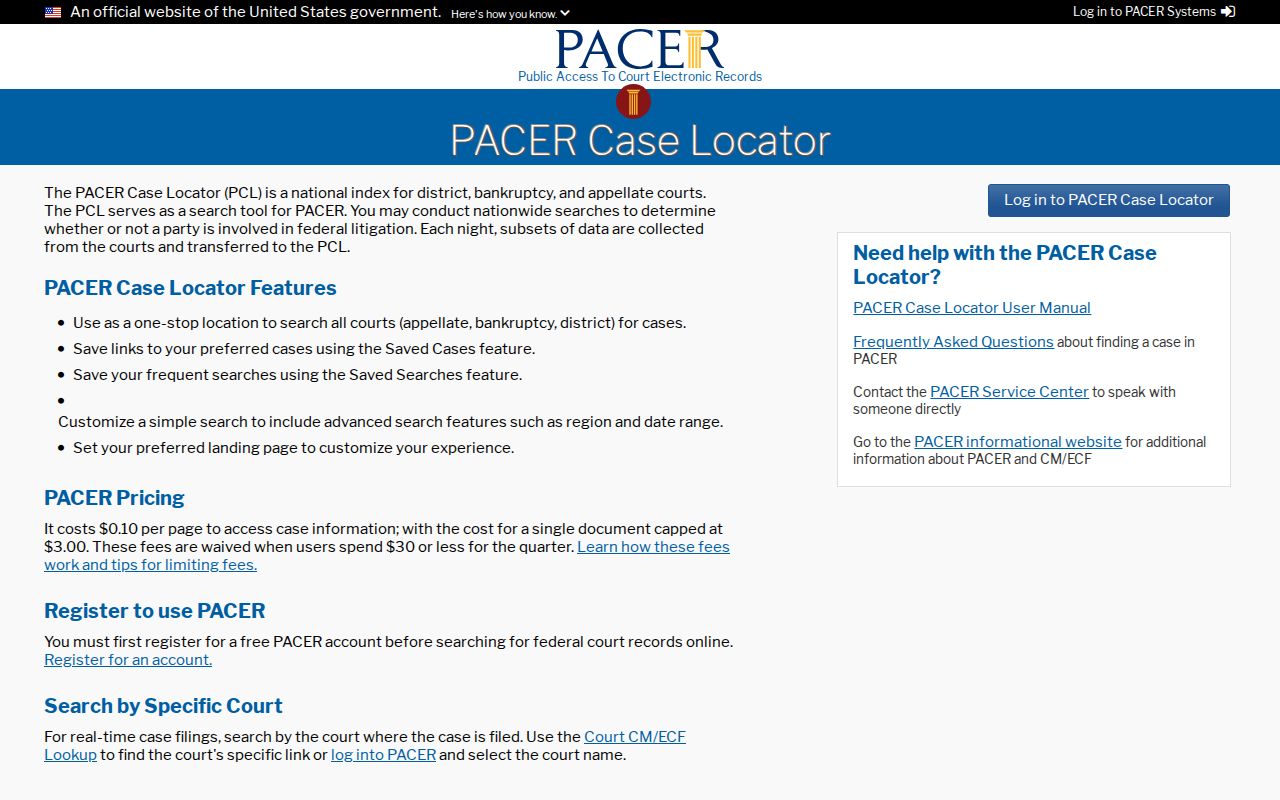
Federal cases live in a separate system. Use the Central District of California and PACER for federal party or docket research, rather than assuming the county court search covers them.
West Hollywood Resident Lookup: Dockets Before Documents
A docket records dated events, like a filing, hearing, order, or disposition. It is not the complete file. Civil and small-claims document images can be pulled online for a fee. Criminal and family-law images never go through the web service. Courthouse Public Access Computers open another review channel. Older files may move to the Archives & Records Center at 222 North Hill Street, Room 212, Los Angeles. Visits there are by appointment.
Mail retrieval also works. Form ADM-080 asks for identifiers and the exact document or certification. It also requires a self-addressed stamped envelope and a not-to-exceed check. The stated retrieval window is eight to ten weeks. Sealed, paternity, minor, unlawful-detainer, and confidential matters carry special limits. So a missing online result can mean the wrong venue, old automation, a spelling slip, or a restricted case. That is different from no record at all.
Federal cases run through PACER Case Locator. Registration is required first. Searches can filter by court, region, case number, party name, and filing-date range. You can also filter by case status or type. Dockets list parties, attorneys, judges, events, dates, and links. Fees are modest. The judiciary charges $0.10 per page. It caps one document at 30 pages and waives a quarterly bill of $30 or less.
Before visiting a clerk, pin down the venue. The county courthouse locator matches each filing to the right courthouse district and filing location.
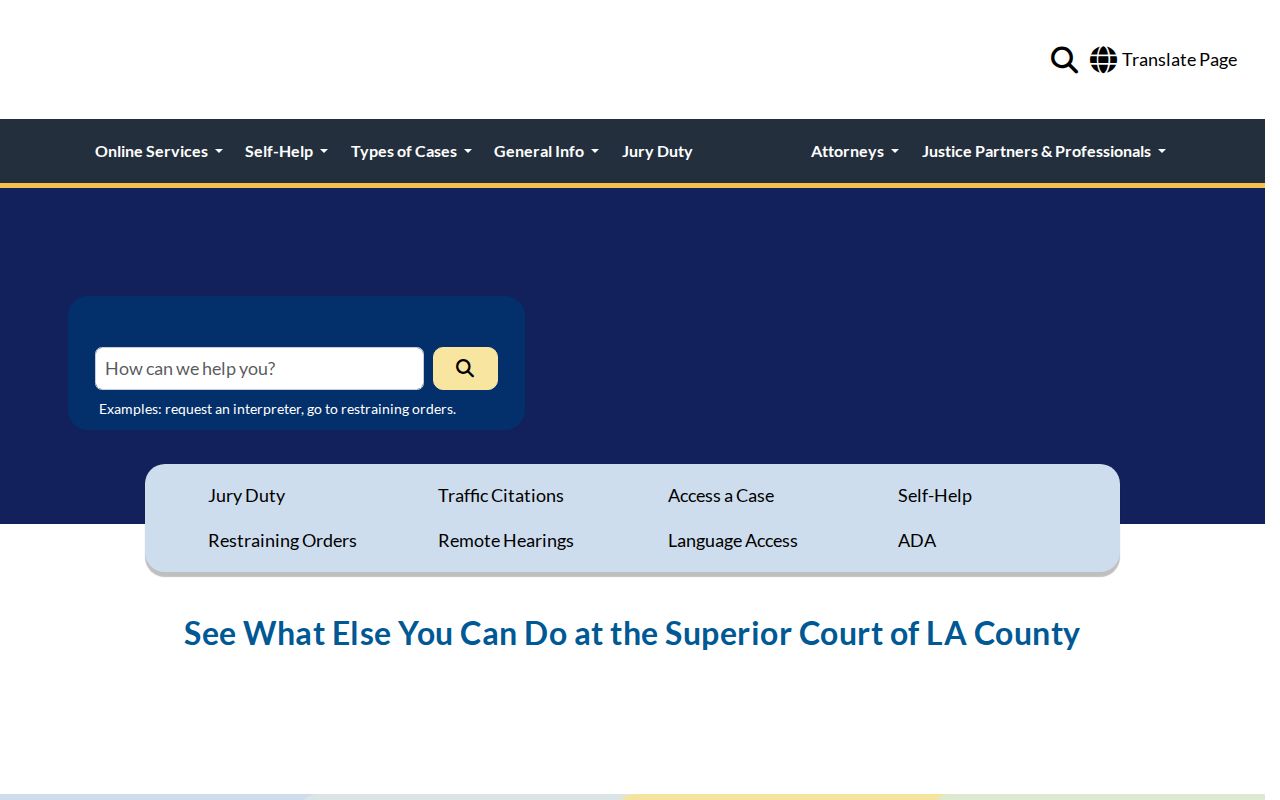
Nail down the court and case type first. A West Hollywood mailing label does not guarantee the courthouse district that actually holds the file.
West Hollywood Voter Lookup for Self-Check
LA County's voter-status portal works as a self-check. It wants a last name, birthdate, residence house number, and ZIP code. A match returns that voter's status and election details. A miss can stem from a changed registration, formatting quirks, a new address, or a nonmatch. The tool will not browse residents by street or ZIP. Full voter files need a permitted purpose and a formal application.
Permitted files can hold name, residence and mailing address, registration date, precinct, district, party preference, status, phone or email where authorized, and participation history. Participation shows only that a ballot was cast. Choices stay private. Elections Code sections 2180 through 2194 bar driver's-license and state-ID numbers, the last four Social Security digits, unique identifiers, and signatures. Safe at Home addresses remain protected.
The LA County voter-status lookup fits when the person supplies the identifying fields. It is not a general people list. Any West Hollywood name search should state whether its result is a self-verification, a controlled file, or nothing at all.
West Hollywood Vital Records by Copy Type
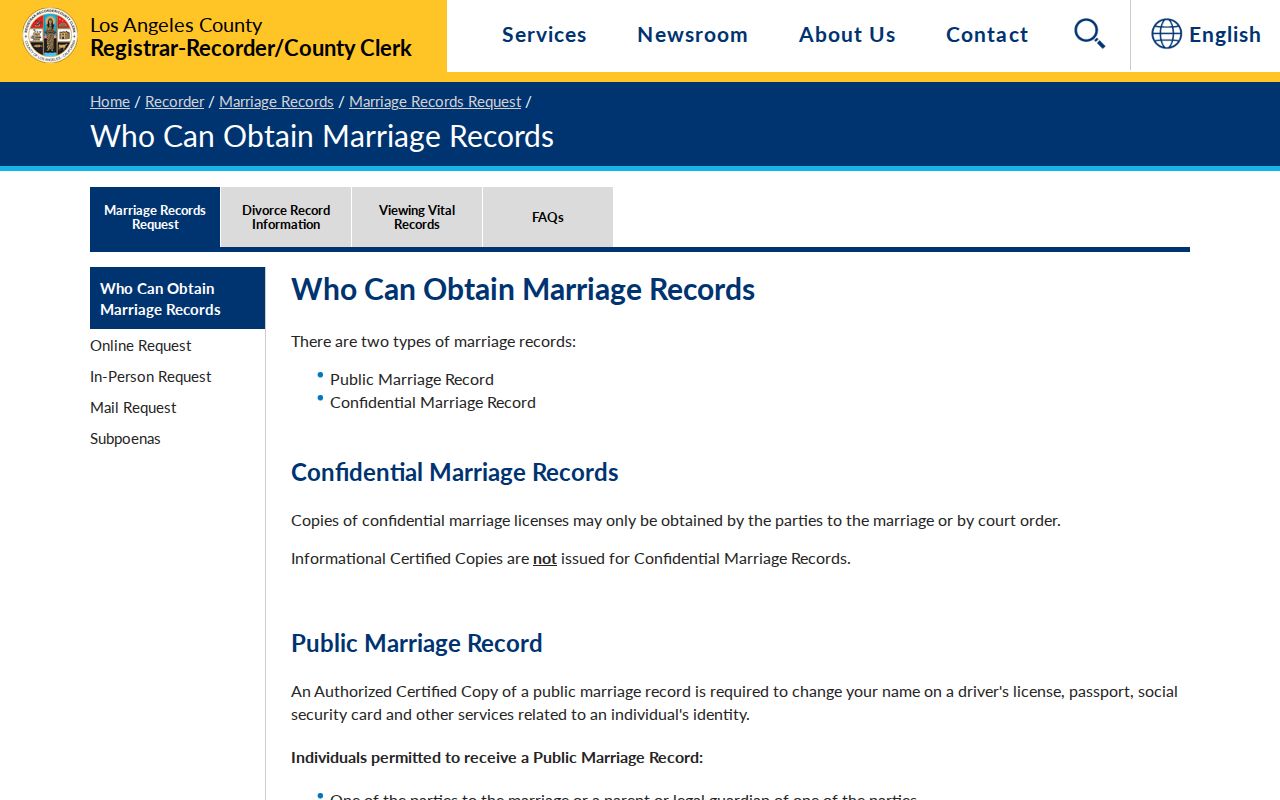
California splits vital copies by requester type. No simple age rule applies. An authorized birth or death copy needs an eligible statutory category and a sworn statement under Health and Safety Code sections 103526 through 103526.5. An informational copy is open more broadly. It is stamped not valid to establish identity. Public marriage records form their own category. Confidential marriage records reach only a party or a court order under Family Code section 511.
For a known Los Angeles County event, the County Registrar-Recorder/County Clerk takes online, mail, and in-person orders, and the county birth-record application route is the first source for a local birth. Separate forms and eligibility rules govern death and marriage. The California Department of Public Health is the statewide fallback. Fees and wait times live on the order page.
Start at the hub. The Los Angeles County recorder service hub opens every birth, death, marriage, and related copy route for the county.
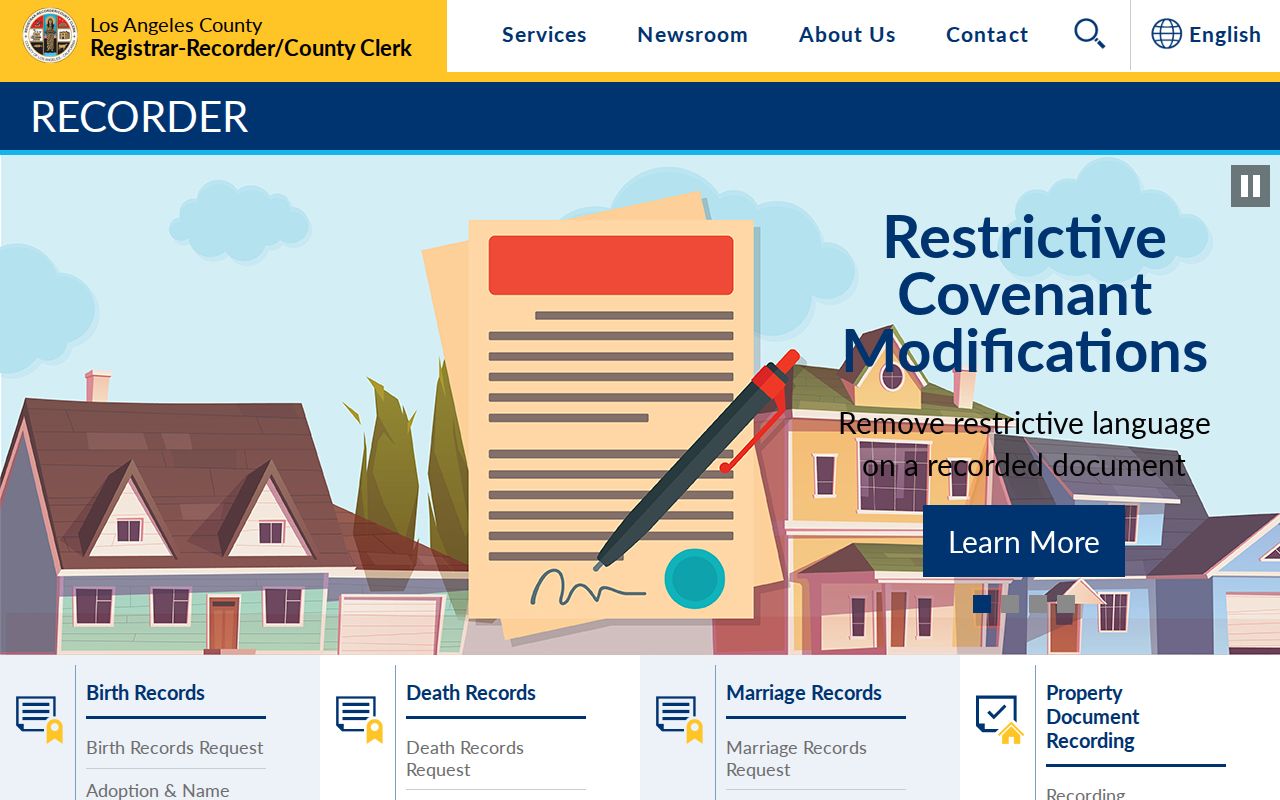
Pick the correct form before an applicant relies on a name or event clue. The county birth-record source shows where the application begins.
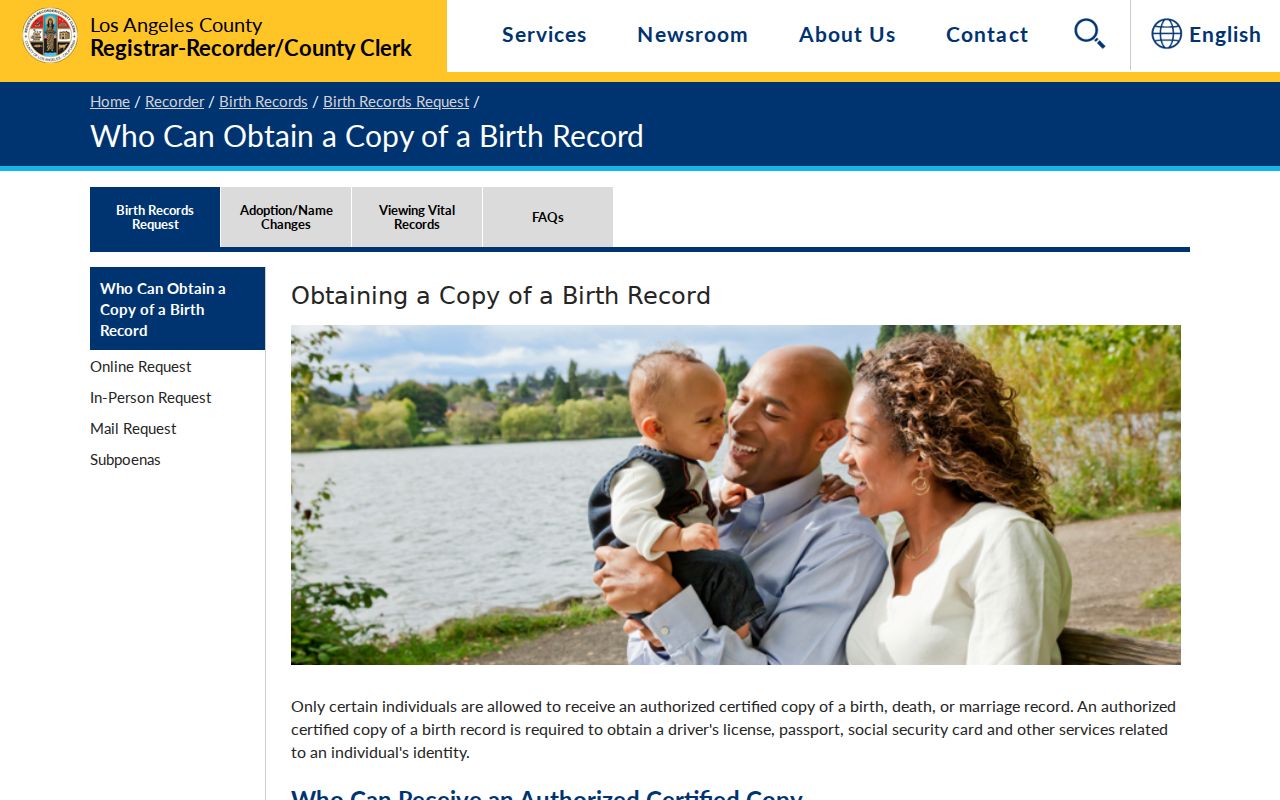
A birth-record result can supply event and parent clues under the applicable copy rules. It does not make every named person a current West Hollywood resident. Treat each name as a lead only.
The county death-record route provides a separate application and eligibility path for a known event.
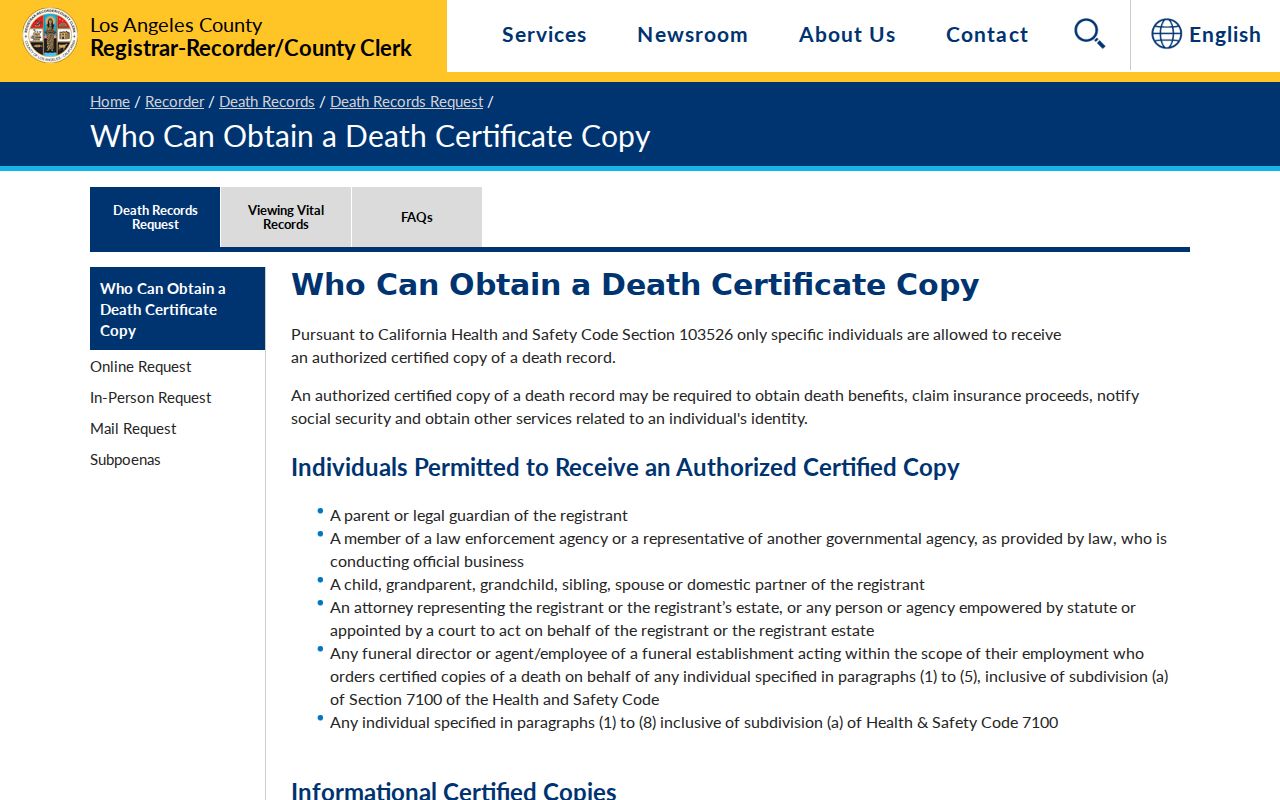
Death records reveal relatives, dates, and places. Probate and obituary evidence helps. Still, verify each source on its own, and use the county marriage-record route for the public and confidential distinctions in a West Hollywood vital-record search.
Divorce evidence splits between the Superior Court file and CDPH certificates of record covering 1962 through June 1984. A certificate is not the full judgment.
West Hollywood Resident Lookup: Find an Heir Through Probate
Probate creates one of the strongest paper trails around. Few searches beat it for a West Hollywood residents directory lookup tied to an heir or an estate. A single petition can name the decedent, the petitioner, counsel, and heirs or devisees. It may also carry addresses as filed. Not everything reaches the public docket, though. The court may redact sensitive details, so the docket is not always the full file. Begin with a case number or a name. From there, the clerk's access route leads to the specific document that supports the relationship.
Cross-check probate against an obituary, a death record, and a deed. Do that only where dates and roles line up. A decedent's address could mean several things. It may be a last known address, a mailing destination, or an estate address. A deed shows a later transfer. A city directory shows an earlier listing. Each record carries its own date. Name the exact fact you relied on rather than claiming more than the documents show.
For family history, this workflow beats a same-name hit. It also produces identifiers that make a focused clerk request practical. Sealed or confidential files are another matter. The court's access rule controls those. A California Public Records Act request to a city office cannot open a judicial file.
West Hollywood Business and License Records
Business and professional records round out a resident lookup. They add affiliations, public agents, licensed practice locations, and organizations tied to a name. They are not residence proof. California's Secretary of State bizfile shows entity name and number. It also covers formation or registration date, status, jurisdiction, addresses, agent for service, due dates, and filings. The Department of Consumer Affairs search shows license type, number, status, issue or expiry date, and location. Discipline links appear where a board posts them.
West Hollywood adds its own layer. The city issues a business tax certificate and regulates 34 business types. When a question concerns a public organization, pair a state entity record with other sources. Add a county fictitious business name, a city record, an ABC license, or a professional board result. An agent address, business address, or practice location is still not a residential conclusion.
The California bizfile search and the DCA license search are free starting points. Basic records are not necessarily certified. Filing images or certified products may carry separate charges.
Official Reunion Paths for a West Hollywood Resident
Some personal searches call for an official route rather than a public name lookup. A birth parent question belongs with California adoption-information, consent, and court procedures. A classmate or military reunion can start with yearbooks, library archives, newspapers, or an obituary. Family-history work may move from a residents directory to other sources. These include a census, vital index, probate file, or cemetery record. Each path respects eligibility rules while still drawing on the public historical shelf.
An old address takes two tracks. A deed chain supplies the parties, and reverse directories supply listed occupants. The West Hollywood street directory page handles the current parcel and address track. Meanwhile, the historical city directory collection covers older listings. The real task is connecting a known person to a dated source. An unverified profile assembled from every available name is worth little.
When a record is wrong, contact the custodian that created it. Save the case number, parcel, license, vital application, or record identifier. A source-specific correction request works far better than an unrelated request. Never ask one office to remove a record it does not control.
Legal Limits on a West Hollywood Resident Lookup
A record search like this can support family history and estate work. It also aids personal-record correction, civic research, and reconnecting with a known person. It cannot turn protected data into a casual directory. California limits voter-file purposes. The federal Driver's Privacy Protection Act shields DMV personal information. Vital, juvenile, adoption, sealed, confidential, and protected-address rules can block a result. That can happen even when the name is right.
California's Safe at Home program gives eligible people a substitute mailing address. An enrolling agency administers it. A missing address may reflect that protection. State consumer privacy rights and the data-broker deletion process target covered businesses and commercial copies. They do not require the recorder, court, or assessor to erase a lawful public record. Corrections belong with the original custodian.
Lawful personal use. Confirm a person with independent, dated records and respect the boundary around protected information. Do not use a name, address, court result, or directory clue to stalk, harass, intimidate, or harm another person.
The California Safe at Home program explains one key confidentiality route. A reliable record check ends with a source, date, role, and limit. It never ends with a claim that a public result describes a whole person.